Working prototype
Real software your team uses on real work, built fast inside your business. Enough to prove the shape and the value.
Where every build starts
How we work
One deliberate process, run by one team. We design the architecture and tech stack first, so we can prototype fast on foundations that hold. Then we iterate the working system through to production, and stay on to run and grow it.
Prototype and production iterate in blocks, pause when you need to
One Growth Pilot team runs every step
The process
3 to 5 days
We work with you on the problem, the users and the constraints, and leave you with a plan and a fixed price for the first block. You can stop here and keep the plan.
Before any screens
We design the data model, security, integrations and hosting, on a proven stack. This is the part that is expensive to get wrong and hard to fix later. Doing it first is what lets us move fast afterwards without rebuilding.
Within weeks
We build on those foundations inside your business, next to the people who will use it. Your team is using real software within weeks, not reading specs.
Block by block
Each block: the thinnest complete path first, a two-week live review on real work, then production hardening. Security, backups, monitoring, performance and the edge cases that only show up under real use. Pause between blocks if you need to.
Ongoing
Ongoing system support from AWS-certified DevOps, and a fractional product team that keeps your product evolving as your business grows.
Inside a block
The thinnest complete path through the problem, on the architecture already in place.
Your people run actual jobs through it. We watch, listen and log what matters.
Shaped by what the review showed. Security, backups, monitoring and performance made production-grade.
Reviewed, in use, supported. Pause here or scope the next block.
The live review is what finds the expensive mistakes in week six instead of month six. What does not fit gets changed while there is still time and budget to change it.
Quality levels
Real software your team uses on real work, built fast inside your business. Enough to prove the shape and the value.
Where every build starts
Hardened, monitored, backed up, security reviewed. Reliable enough to run the business on, with support after launch.
What most clients buy
Multi-tenant, billable, documented and supportable as a product in its own right.
Quoted separately, later
How we build
Most of what we ship runs on the same building blocks: TypeScript, React and Next.js on the web, Expo / React Native for mobile, Postgres (usually via Supabase), and AWS for hosting, storage and document processing. Reusing a stack we know is what makes the architecture step fast and the systems easy to support.
We build with Claude Code and Cursor. Every repo carries its own agent instructions, coding standards, a domain glossary and architecture decision records, so the AI tools follow the project's rules rather than guessing. Reusable agent skills cover common workflows such as migrations and new features. Architecture and every significant change are still reviewed by our senior engineers. Prototype speed without giving up production quality.
Tools we use
Worked example
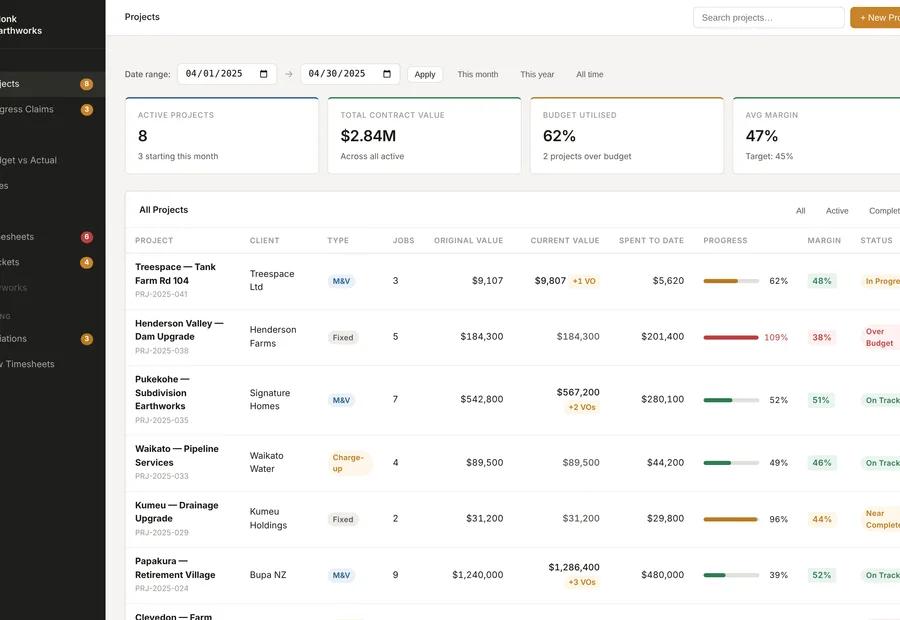
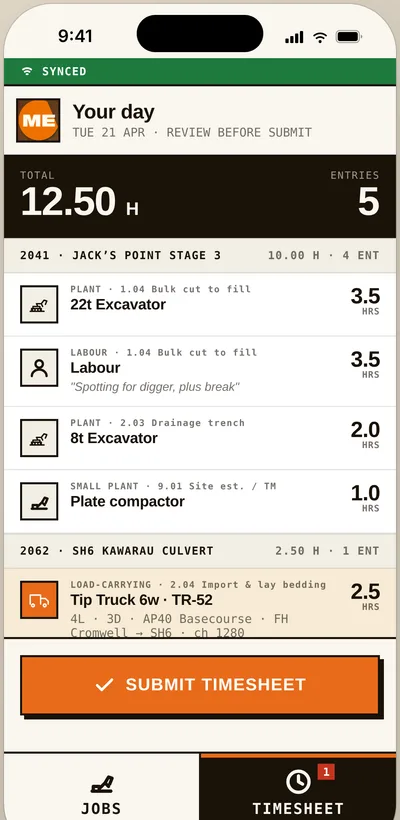
A civil contractor running on WorkflowMax and spreadsheets. We designed the foundations, built the back office first, ran real claims through it with the office team, then shipped a timesheet app that 13 crew use every day. Iteration continues block by block.
Read the Monk Earthworks storyThree to five days with Kevin. A build-ready plan and a fixed price for block one, with the fee credited to the build.